Online Safety • Everyday Awareness
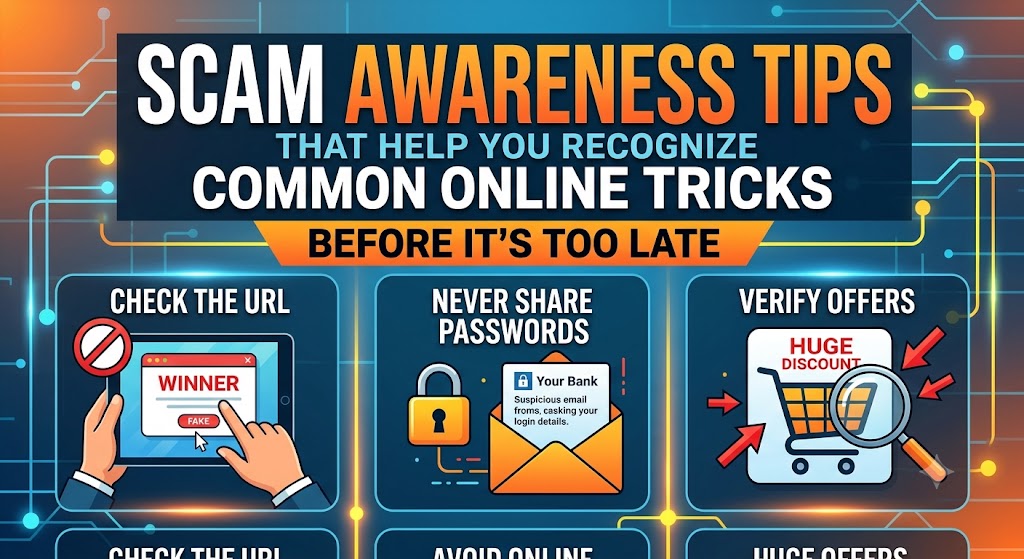
Online scams often work by creating pressure, confusion, or a false sense of urgency. Learning to pause, question unusual requests, and check information independently can help you recognize common tricks before they lead to bigger problems.
Pause first.
A few extra seconds can be more valuable than an instant response.
Online scams have become part of everyday digital life. They can appear through email, text messages, social media, websites, phone calls, online marketplaces, and even messages that seem to come from people you know. While the details may change, many scams rely on familiar psychological tricks: urgency, fear, excitement, trust, and curiosity.
A message may claim that your account will be closed unless you act immediately. Another may promise an unexpected reward, job opportunity, refund, or prize. Some scams impersonate banks, delivery companies, government services, technology companies, or customer support teams.
Recognizing these tricks is not about becoming suspicious of everything online. It is about developing a few habits that help you slow down when something feels unusual. A careful response can prevent many common scams from succeeding.
The First Warning Sign: Pressure to Act Immediately
Scammers often want people to react before they have time to think. A message may say that an account will be suspended in minutes, a payment must be confirmed immediately, or an opportunity will disappear if you do not respond now.
Urgency is not automatically proof of a scam, but unexpected pressure should always be treated carefully. Instead of using the link or phone number provided in a suspicious message, visit the official website or app independently and check the account there.
A useful online safety habit
Stop. Check. Verify independently. Never let an unexpected message decide how quickly you must respond.
Look Closely at Who Is Actually Contacting You
Scammers often try to imitate trusted organizations. A message can use a familiar logo, professional design, and language that sounds official. The appearance alone does not confirm that the sender is genuine.
Check the email address, website address, account name, and other contact details carefully. Small differences in spelling or unusual website names can be warning signs. However, even a realistic-looking address should not be trusted automatically if the message was unexpected.
Check the Sender
Look beyond the display name and examine the actual contact address.
Check the Website
Do not assume a professional-looking page belongs to a legitimate organization.
Check the Request
Unexpected demands for sensitive information deserve extra caution.
Be Careful With Unexpected Links and Attachments
Links and attachments are common tools in online scams. A link may lead to a fake login page designed to collect information, while an attachment may be used to deliver unwanted or harmful software.
If a message is unexpected, avoid opening links simply to find out what they contain. Instead, visit the relevant organization through a trusted method, such as typing its official website into your browser or using its official app.
Attachments should also be treated carefully, especially when the sender is unknown or the file was not expected. Even a message that appears to come from someone familiar can be suspicious if the content does not match their usual communication style.
A Safer Way to Check a Message
- Read the message without clicking anything.
- Consider whether you were expecting the communication.
- Check the sender details carefully.
- Open the official website or app independently.
- Verify the request through a trusted contact method.
Watch for Requests for Sensitive Information
Scams often attempt to collect information that can be used to access accounts or create further problems. This can include passwords, security codes, banking information, identification details, or other personal data.
Be especially careful when someone contacts you unexpectedly and asks for information that can be used to verify, access, or recover an account. A genuine organization may have official verification processes, but you should confirm those processes through an independently trusted channel.
Unexpected Request
Treat surprise requests for passwords or verification details as a reason to pause and investigate.
Unexpected Caller
Do not assume a caller is genuine simply because they know your name or claim to represent a trusted organization.
Understand the Emotional Tricks Scammers Use
Many scams are designed around emotional reactions. Fear can make someone act quickly to avoid losing an account. Excitement can make an unexpected prize seem more believable. Sympathy can make a person want to help before checking the facts.
Common emotional triggers include:
Threats about accounts, money, or penalties.
Unexpected prizes, rewards, or special offers.
Pressure to respond before time runs out.
Impersonation of familiar people or organizations.
When a message creates a strong emotional reaction, that can be a good reason to slow down. The more urgent, exciting, or frightening a request appears, the more important independent verification becomes.
Be Careful With Offers That Sound Unusually Good
Unexpected opportunities can be attractive, especially when they promise easy money, large rewards, guaranteed results, or unusually high value with little effort. Legitimate offers can exist, but extraordinary claims deserve closer examination.
Take time to research the organization independently. Look for clear contact information, a genuine business presence, and information that can be verified outside the message itself. Do not rely only on screenshots, testimonials, or claims provided by the person making the offer.
Five Questions to Ask Before You Trust an Unexpected Message
- Was I expecting this message?
- Why is the sender asking me to act immediately?
- Can I verify this request through an official source?
- Is someone asking for information that should remain private?
- Would I still trust this message if I waited an hour before responding?
Be More Cautious When Money Is Involved
Payment requests deserve special attention. Scammers may pretend to offer technical support, investment opportunities, online purchases, job-related payments, refunds, or emergency assistance.
Before sending money or sharing payment details, verify who you are dealing with through a trusted method. Avoid making decisions based only on a message, call, or screenshot provided by the other person.
It is also wise to understand how a payment method works before using it. Some transfers may be difficult to reverse once completed, which makes independent verification even more important.
Protect Your Accounts Before a Problem Happens
Strong, unique passwords and available security features can reduce the risk of account problems. Keep important account information private and review unfamiliar security alerts carefully.
It can also be helpful to keep recovery information current so that legitimate account issues can be handled through official processes rather than through unexpected messages.
Trust Caution More Than Embarrassment
One reason people sometimes continue with a suspicious conversation is that they feel uncomfortable questioning the other person. It is important to remember that you do not owe an unexpected caller, sender, or online contact an immediate response.
Ending a conversation, ignoring a suspicious message, or taking time to verify a request is reasonable. A legitimate organization should not depend on preventing you from checking its identity.
The Most Useful Habit
You do not need to recognize every type of scam immediately. You only need to recognize when something deserves a pause.
Unexpected messages, urgent requests, unusual payment demands, and requests for sensitive information should all encourage extra caution. By slowing down and verifying information independently, you can reduce the chance of being caught by common online tricks and make safer decisions before a small mistake becomes a larger problem.