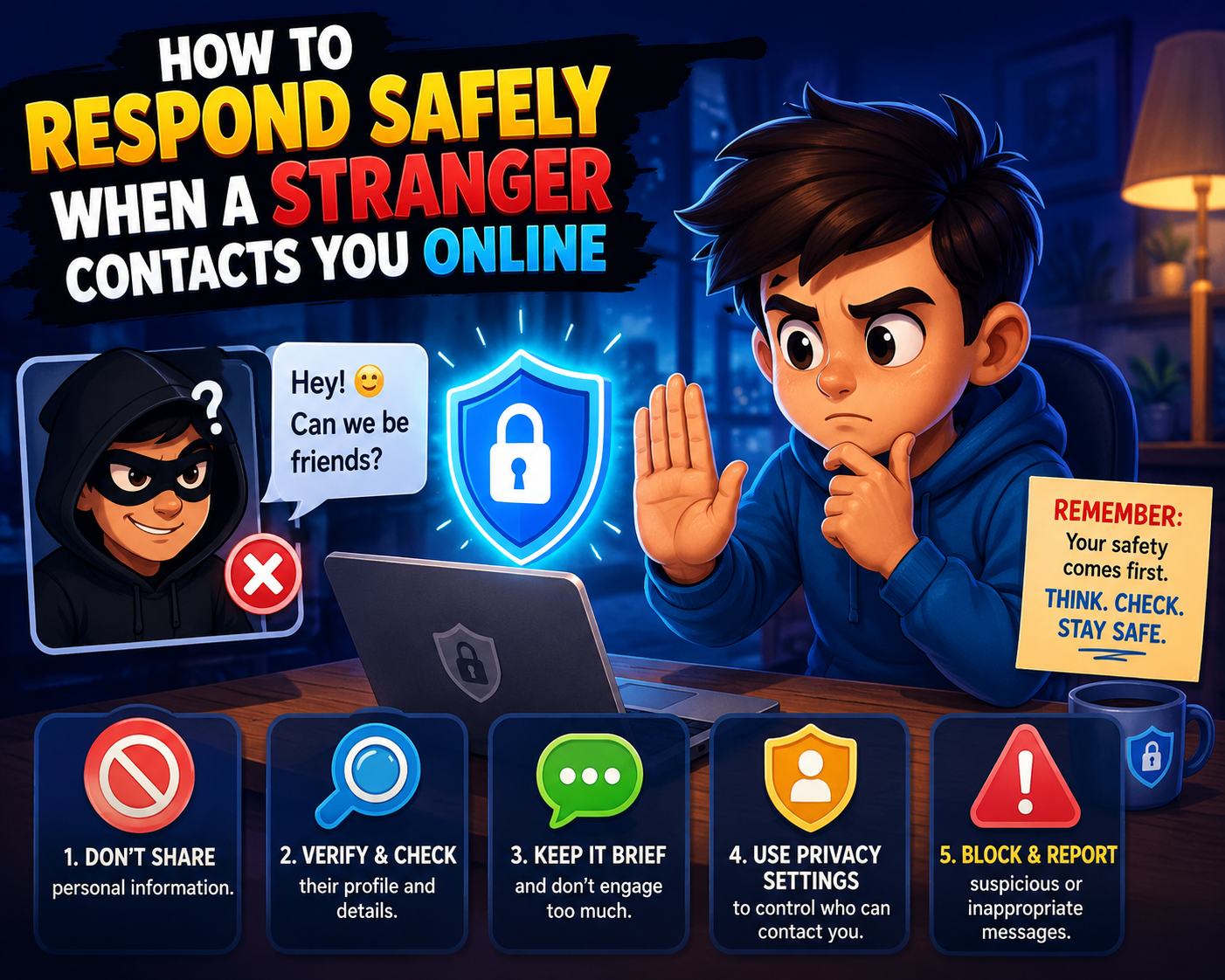
Receiving messages from strangers online has become a normal part of using social media, messaging apps, online marketplaces, gaming platforms, and professional networks. While many conversations are harmless, some strangers may have dishonest intentions. Knowing how to respond safely helps protect your privacy, personal information, finances, and online accounts without preventing genuine connections.
Why Caution Matters
Scammers and cybercriminals often begin with friendly conversations instead of obvious scams. They may pretend to share your interests, offer business opportunities, request help, or create emotional stories to gain your trust over time. The safest approach is to remain polite while protecting your personal information until you’ve confirmed who you’re communicating with.
Protect Your Identity
Avoid sharing personal details that could be used for identity theft or account recovery.
Prevent Financial Fraud
Careful conversations reduce the risk of payment scams and fake investment opportunities.
Maintain Privacy
Limiting personal information keeps your online presence more secure.
Safe Ways to Respond
Stay Calm
Do not feel pressured to reply immediately. Take a moment to review the profile and message carefully.
Check the Profile
Look for realistic activity, consistent information, and genuine interactions. Newly created or incomplete profiles deserve extra caution.
Avoid Sharing Personal Details
Never provide passwords, verification codes, banking information, home addresses, or copies of identification documents.
Question Unusual Requests
If someone quickly asks for money, gifts, investments, or confidential information, end the conversation until you can verify the request independently.
Use Platform Safety Tools
Most social networks and messaging apps allow you to block, mute, or report suspicious users.
Trust Your Instincts
If something feels unusual or inconsistent, it’s perfectly reasonable to stop communicating.
Quick Response Guide
| Situation | Safe Response |
|---|---|
| Unexpected friend request | Review the profile before accepting. |
| Request for personal details | Politely decline and protect your privacy. |
| Money or investment opportunity | Research independently before responding. |
| Suspicious links | Do not click until verified. |
| Harassing messages | Block and report the account. |
Frequently Asked Questions
Is it safe to reply to every stranger?
Not always. While many people have genuine reasons for reaching out, it’s important to verify who you’re communicating with before sharing personal information.
Should I click links sent by strangers?
No. Verify the destination first or avoid opening the link altogether if you don’t trust the sender.
How do scammers build trust?
Many scammers spend time creating friendly conversations before asking for money, personal details, or account information.
What should I do if I feel uncomfortable?
Stop responding, block the account if necessary, and report suspicious behavior using the platform’s reporting tools.
Final Thoughts
Talking with new people online can be enjoyable and beneficial, but every conversation deserves a reasonable level of caution. By verifying profiles, protecting your personal information, avoiding suspicious links, and questioning unusual requests, you can communicate more confidently while reducing the risk of online scams. Safe online interactions begin with thoughtful decisions, not fear.