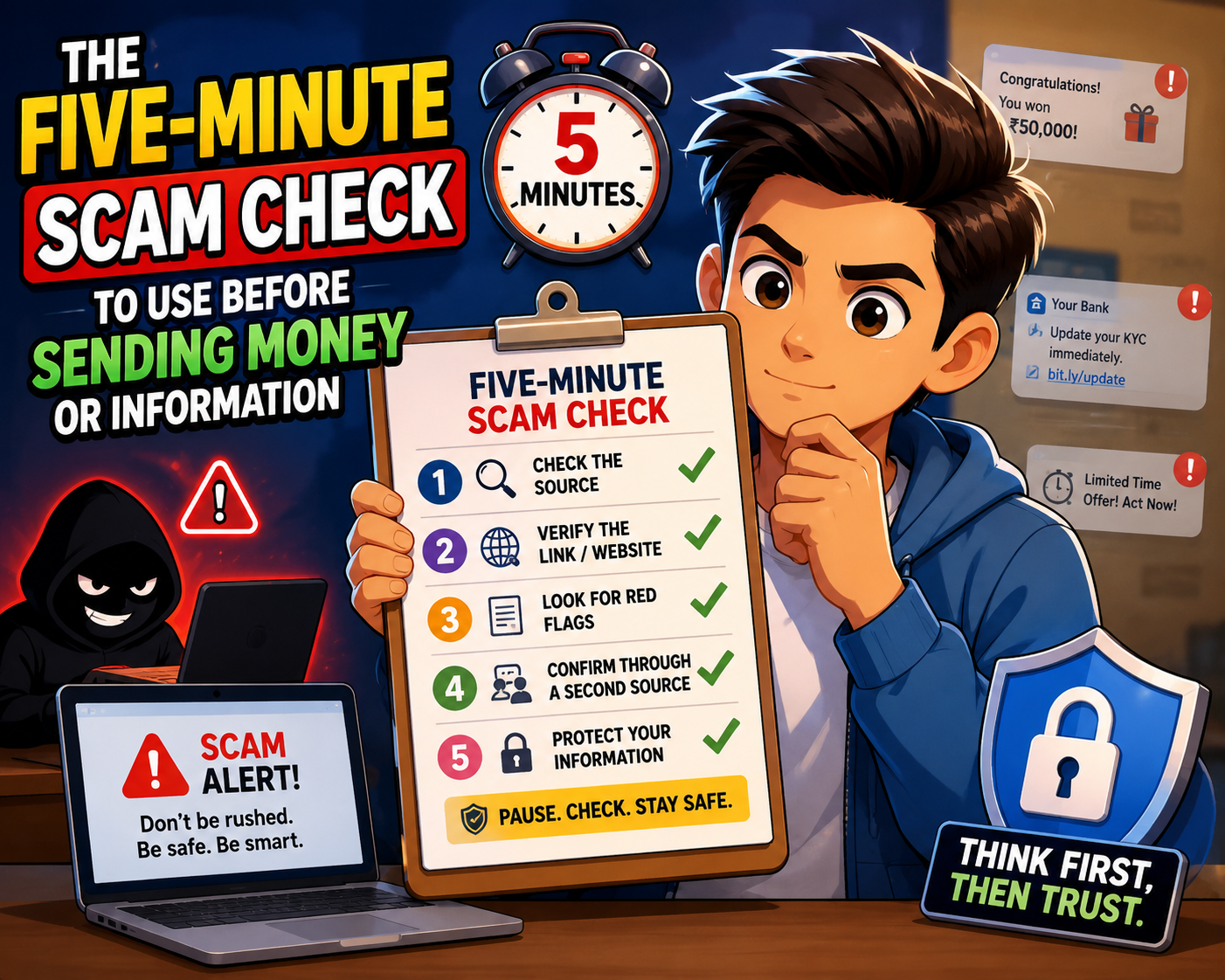
Why a Five-Minute Check Matters
Many online scams succeed because people react emotionally to unexpected situations. Messages claiming that your account has been locked, a family member needs emergency assistance, or a payment must be made immediately are designed to create urgency.
By delaying your response for just a few minutes, you give yourself time to verify the information, notice suspicious details, and avoid costly mistakes. Legitimate businesses and trusted organizations generally allow you time to confirm requests through official channels.
The Five-Minute Scam Check
Pause Before Responding
Do not click links, open attachments, or send payments immediately. Taking a short break helps reduce emotional decision-making.
Verify the Sender
Check email addresses, phone numbers, or usernames carefully. Scammers often imitate trusted organizations using similar names.
Confirm the Request Independently
Instead of replying to the message, contact the organization using official contact information found on its verified website.
Look for Warning Signs
Watch for urgent deadlines, spelling mistakes, suspicious website addresses, requests for gift cards, cryptocurrency, or confidential information.
Proceed Only After Verification
If everything checks out through official sources, continue confidently. If anything remains suspicious, stop and seek additional confirmation.
Quick Decision Guide
| Situation | Best Response |
|---|---|
| Unexpected payment request | Verify directly with the organization. |
| Email asking for passwords | Never provide login credentials. |
| Limited-time emergency offer | Pause and investigate first. |
| Unknown attachment | Do not open until verified. |
| Unexpected banking alert | Use the bank’s official website or app. |
Common Mistakes to Avoid
- Sending money because a message seems urgent.
- Trusting caller ID without verification.
- Sharing verification codes with strangers.
- Ignoring browser or security warnings.
- Following links instead of visiting official websites.
- Assuming familiar logos prove authenticity.
Frequently Asked Questions
Do legitimate companies allow time for verification?
Yes. Most reputable organizations understand that customers may wish to confirm requests before sending money or personal information.
What if the request appears to come from someone I know?
Contact the person using a different communication method to confirm the request before taking any action.
Why do scammers create urgency?
Urgency reduces careful thinking and makes people less likely to verify suspicious requests or notice warning signs.
Is five minutes really enough?
In many situations, yes. Even a brief pause allows you to verify information, inspect website addresses, and think more clearly before responding.
Final Thoughts
The five-minute scam check is one of the simplest habits you can develop to improve your online safety. By pausing, verifying unexpected requests, checking for warning signs, and confirming information through official sources, you dramatically reduce the likelihood of becoming a victim of fraud. A few extra minutes today can protect your money, personal information, and online accounts from long-term consequences.