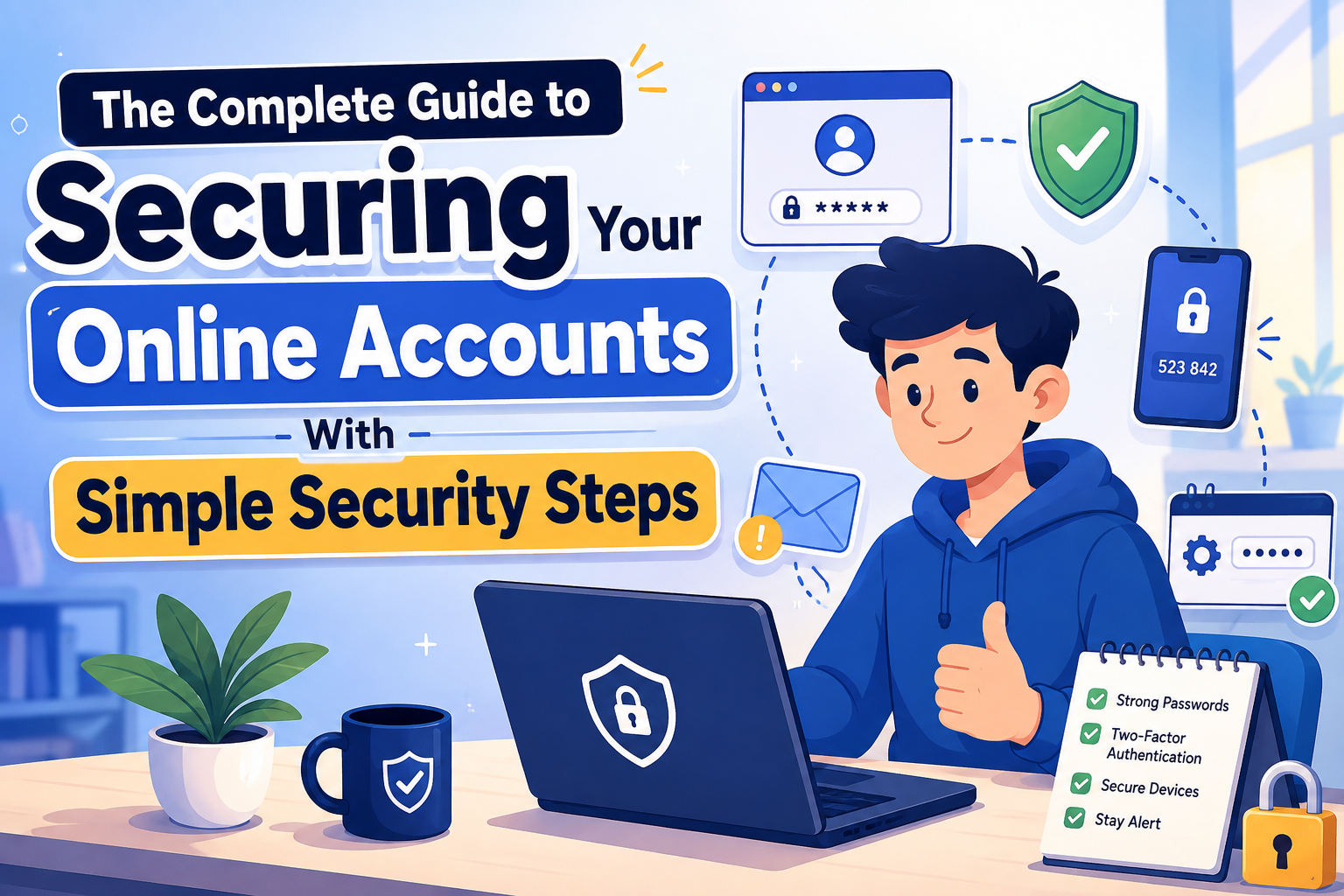
From email and banking apps to shopping websites and social media, your online accounts hold valuable personal information. Following a few simple security practices can significantly reduce the risk of unauthorized access, identity theft, and online fraud.
Every online account you create becomes part of your digital identity. If one account is compromised, attackers may attempt to access others using the same login details. Fortunately, securing your accounts doesn’t require advanced technical knowledge. By combining strong passwords, authentication tools, regular monitoring, and safe browsing habits, you can create multiple layers of protection that make your accounts much harder to compromise.
Start With Strong Password Security
Passwords remain one of the most important defenses against unauthorized access. Each important account should have its own unique password that combines letters, numbers, and symbols. Avoid using easily guessed information such as birthdays, names, or common words.
Password managers can also help generate and safely store complex passwords, making it easier to maintain different credentials for every account.
Enable Multi-Factor Authentication
Multi-factor authentication (MFA) adds an additional verification step after entering your password. This extra layer makes it much more difficult for someone to access your account, even if they know your password.
Authenticator Apps
Generate secure verification codes without relying solely on text messages.
Security Keys
Provide strong protection for highly sensitive personal or work accounts.
Login Notifications
Receive alerts whenever someone attempts to access your account.
Recovery Options
Keep recovery email addresses and phone numbers current.
Review Account Security Settings
Most online services include security dashboards that allow you to monitor connected devices, active sessions, login history, and authorized applications. Reviewing these settings regularly helps identify unfamiliar activity before it becomes a larger problem.
| Security Feature | Purpose |
|---|---|
| Unique Passwords | Prevent one compromised account from affecting others. |
| Multi-Factor Authentication | Add an additional login verification step. |
| Device Management | Remove unfamiliar or unused devices. |
| Login History | Monitor suspicious sign-in attempts. |
| Recovery Information | Ensure account recovery remains possible if needed. |
Recognize Common Cyber Threats
Many attacks begin with phishing emails, fake websites, or fraudulent messages that encourage users to reveal passwords or financial information. Always verify unexpected requests before clicking links or downloading attachments.
If something seems unusual, contact the organization directly using verified contact information rather than responding through the suspicious message.
Maintain Device Security
Monitor Your Accounts Regularly
Review financial transactions, login activity, and account notifications on a regular basis. Early detection of unusual activity allows you to change passwords, revoke unauthorized access, and contact service providers before significant damage occurs.
Monthly Security Checklist
- Review passwords for important accounts.
- Verify recovery email addresses and phone numbers.
- Remove unused connected devices.
- Review third-party application permissions.
- Check recent login history.
- Update software across all devices.
Frequently Asked Questions
Yes. Using unique passwords prevents attackers from accessing multiple accounts if one password is exposed.
Absolutely. It provides one of the most effective additional layers of account protection available today.
Checking important account settings every few months—and immediately after any suspicious activity—is a good security practice.
Final Thoughts
Securing your online accounts is an ongoing process rather than a one-time task. By creating strong unique passwords, enabling multi-factor authentication, reviewing account settings, recognizing phishing attempts, maintaining updated devices, and monitoring account activity, you can significantly reduce your exposure to cyber threats. While no security measure offers complete protection, combining these simple habits creates multiple layers of defense that make your digital life far more secure. Investing a small amount of time today can help protect your personal information, finances, and online identity for years to come.