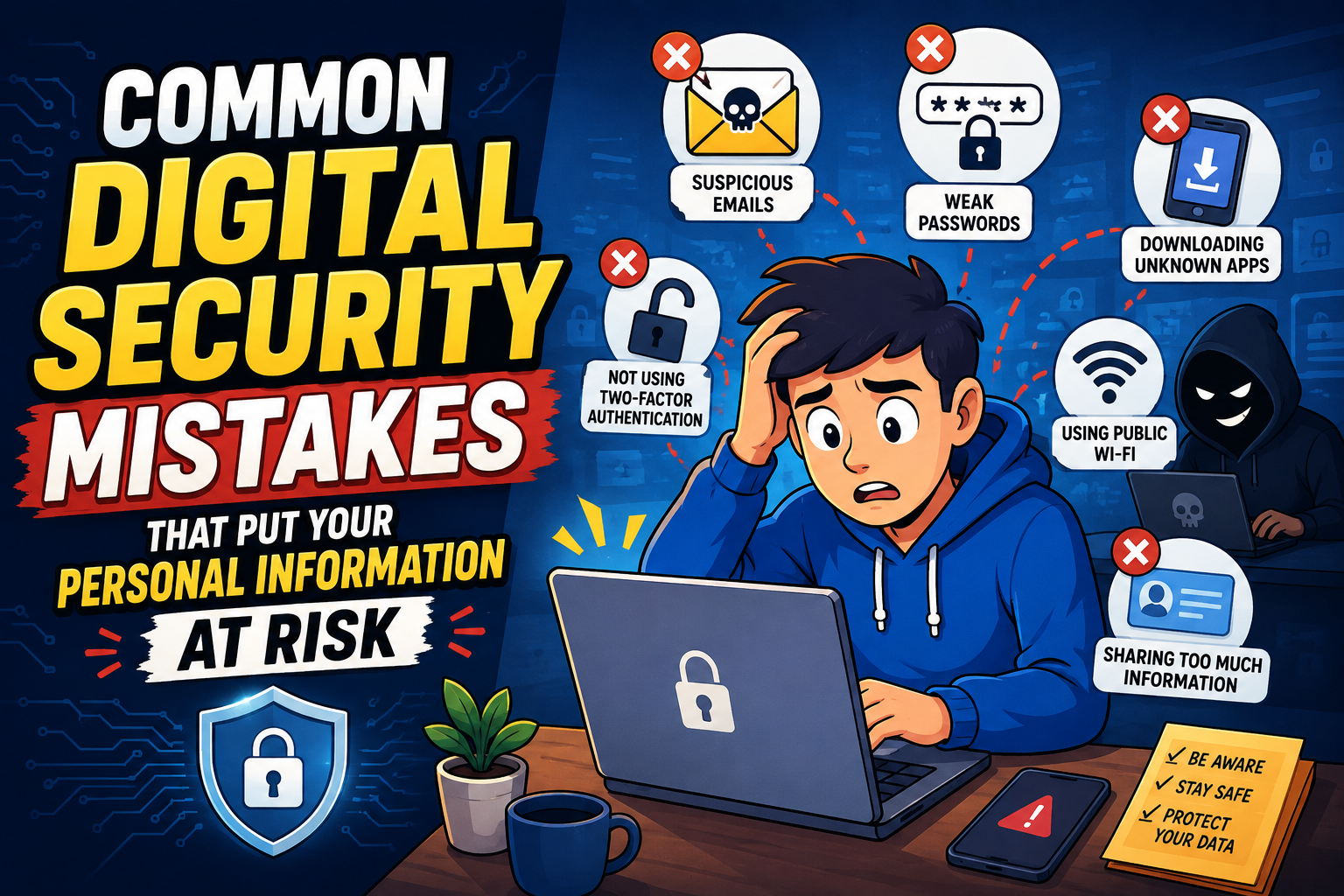
Avoid Everyday Digital Habits That Can Expose Your Personal Information
Many cybersecurity incidents happen because of simple mistakes rather than sophisticated hacking. Understanding these common errors can help you better protect your accounts, devices, financial information, and digital identity.
As our daily lives become increasingly connected through smartphones, computers, online banking, shopping, and social media, protecting personal information has never been more important. While cybercriminals continue developing new attack methods, many successful breaches still depend on users making avoidable mistakes. Fortunately, recognizing these habits and replacing them with safer alternatives can greatly reduce your risk of becoming a victim of identity theft, fraud, or unauthorized account access.
Why Small Mistakes Can Have Big Consequences
A single weak password, delayed software update, or careless click on a suspicious link may provide attackers with an opportunity to compromise your accounts. Digital security works best when several protective habits are combined rather than relying on just one defense.
Building awareness is the first step toward reducing unnecessary risks and protecting valuable personal information.
Common Digital Security Mistakes
Reusing Passwords
Using the same password across multiple accounts allows one compromised account to put many others at risk.
Ignoring Software Updates
Delaying updates may leave devices vulnerable to security flaws that have already been fixed.
Clicking Unknown Links
Unexpected emails, text messages, or social media links may lead to phishing websites or malware.
Oversharing Personal Information
Publicly sharing sensitive details can make social engineering and identity theft easier.
Security Habits That Need Attention
Many people assume that antivirus software alone provides complete protection. While security software is valuable, everyday habits remain equally important for preventing cyber threats.
| Common Mistake | Safer Alternative |
|---|---|
| Using one password everywhere | Create a unique password for every important account. |
| Skipping updates | Enable automatic updates whenever possible. |
| Connecting to unsecured public Wi-Fi | Use trusted networks for sensitive activities. |
| Ignoring login notifications | Review account activity regularly. |
| Downloading unknown files | Install software only from trusted sources. |
Protect Your Online Accounts
Strong passwords and multi-factor authentication remain two of the most effective ways to secure online accounts. Together they provide multiple layers of protection even if one security measure is compromised.
Think Before You Share
Cybercriminals often collect publicly available information from social media profiles and combine small details to build convincing scams. Avoid sharing travel plans, financial information, identification numbers, or sensitive personal details unless absolutely necessary.
Review privacy settings regularly to control who can view your content and personal information.
Simple Daily Security Checklist
- Use strong, unique passwords for every important account.
- Enable multi-factor authentication.
- Install software and operating system updates promptly.
- Verify unexpected emails before responding.
- Review account login history regularly.
- Back up important files to a secure location.
Frequently Asked Questions
Yes. If one website experiences a data breach, reused passwords may allow attackers to access your other accounts.
Updates often fix known security vulnerabilities that cybercriminals actively try to exploit.
No security approach is perfect, but combining safe habits with built-in security features greatly reduces many common risks.
Final Thoughts
Many cybersecurity incidents are preventable because they begin with simple, everyday mistakes. Reusing passwords, ignoring updates, clicking suspicious links, sharing excessive personal information, or overlooking account security settings can all increase your exposure to online threats. Fortunately, replacing these habits with stronger security practices—such as enabling multi-factor authentication, creating unique passwords, reviewing privacy settings, and staying alert to phishing attempts—provides meaningful protection for your personal information. Consistency is one of the most powerful tools in digital security, and small improvements today can help keep your online accounts safer for years to come.