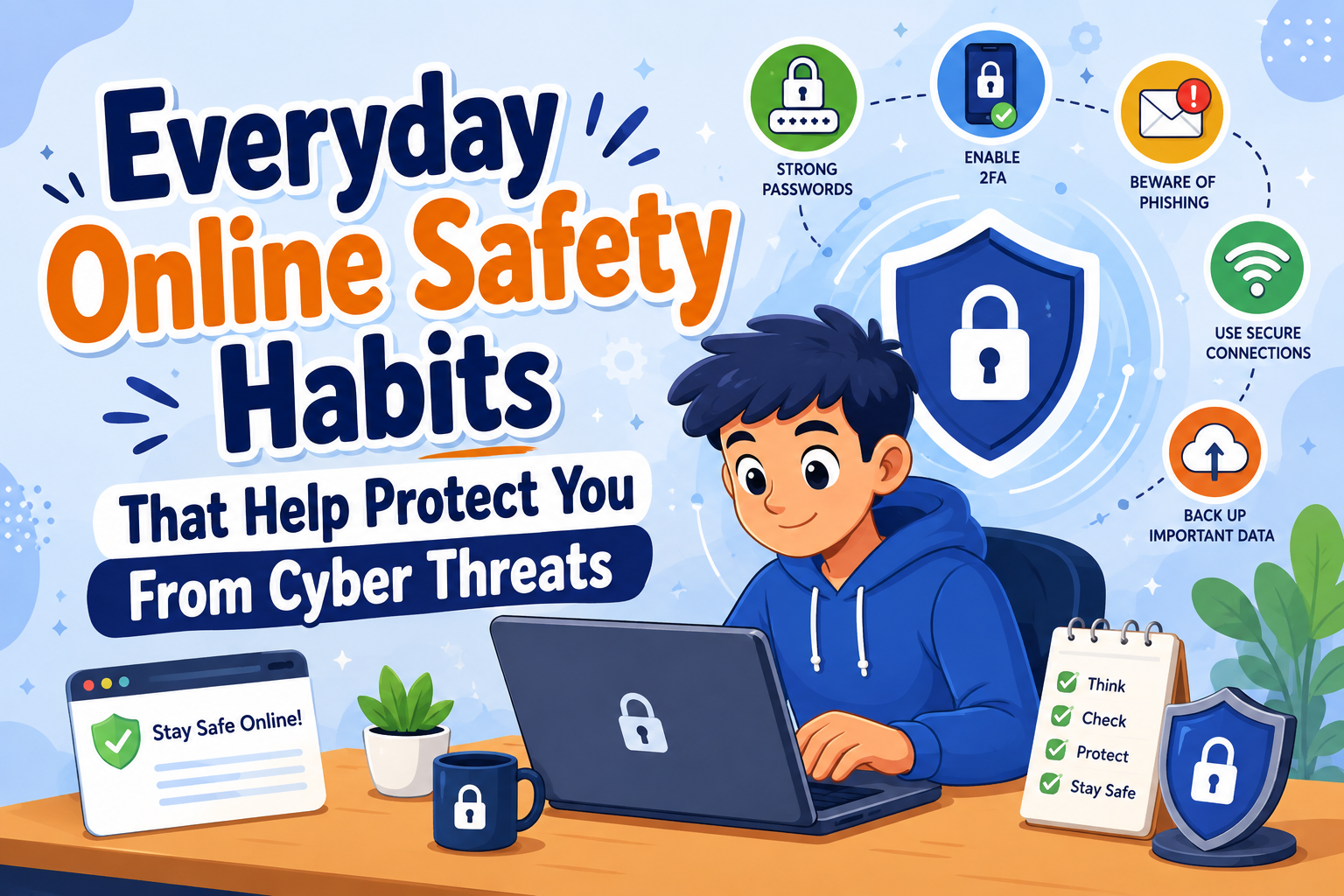
Build Daily Online Habits That Keep You Safer
Cybersecurity isn’t only about antivirus software or advanced technology. Simple everyday habits—like using strong passwords, recognizing suspicious messages, and keeping devices updated—can greatly reduce your risk of becoming a victim of online threats.
The internet has become an essential part of modern life, helping us communicate, shop, learn, work, and manage finances. Along with these conveniences comes the responsibility of protecting personal information from cybercriminals. Fortunately, staying safe online doesn’t require expert technical skills. By developing smart daily habits and remaining alert to common cyber risks, you can significantly improve your digital security while using the internet with greater confidence.
Why Everyday Online Safety Matters
Cyber threats continue to evolve, but many attacks still rely on simple human mistakes rather than advanced hacking techniques. Weak passwords, outdated software, clicking suspicious links, or sharing too much personal information can all increase your risk of identity theft, financial fraud, or unauthorized account access.
Making security part of your everyday routine helps prevent many common online threats before they become serious problems.
Essential Daily Cyber Safety Habits
Create Strong Passwords
Use unique passwords for important accounts and avoid reusing the same password across multiple services.
Enable Two-Factor Authentication
Add an extra layer of protection by requiring a second verification step when signing in.
Update Your Devices
Install operating system and application updates promptly to receive important security improvements.
Think Before You Click
Be cautious with unexpected emails, messages, links, or attachments—even if they appear legitimate.
Protect Your Personal Information
Avoid oversharing personal details on websites or social media. Information such as birthdays, addresses, travel plans, or financial details may seem harmless but can sometimes help scammers build convincing fraud attempts.
| Online Habit | Security Benefit |
|---|---|
| Strong Passwords | Reduce the risk of unauthorized account access. |
| Software Updates | Fix known security vulnerabilities. |
| Private Wi-Fi | Provide safer internet connections for sensitive activities. |
| Security Notifications | Alert you about unusual account activity. |
| Regular Backups | Help recover important data if devices are compromised. |
Browse More Carefully
Always verify website addresses before entering sensitive information. Cybercriminals sometimes create fake websites that closely resemble trusted businesses in an attempt to steal passwords or payment details.
Secure Your Home Network
Your home Wi-Fi network is often the gateway to many connected devices. Change the default router password, use strong wireless encryption when available, and regularly install firmware updates provided by the manufacturer.
Limiting access to trusted users helps reduce the chances of unauthorized connections.
Quick Cyber Safety Checklist
- Enable automatic updates whenever possible.
- Use different passwords for important accounts.
- Turn on login alerts for sensitive accounts.
- Back up important files regularly.
- Verify unexpected messages before responding.
- Review privacy settings every few months.
Frequently Asked Questions
No. Antivirus software is helpful, but safe browsing habits and strong account security remain equally important.
Change passwords immediately if you suspect they have been exposed, and review important account security regularly.
Yes. Consistent security practices greatly reduce many common online risks and help protect your personal information over time.
Final Thoughts
Cybersecurity is most effective when it becomes part of your everyday routine rather than something you think about only after a problem occurs. Simple habits such as using strong passwords, enabling two-factor authentication, updating devices, verifying suspicious messages, securing your home network, and protecting personal information create multiple layers of defense against cyber threats. While no security measure can eliminate every risk, practicing these habits consistently can greatly improve your online safety and help you enjoy the internet with greater confidence and peace of mind.