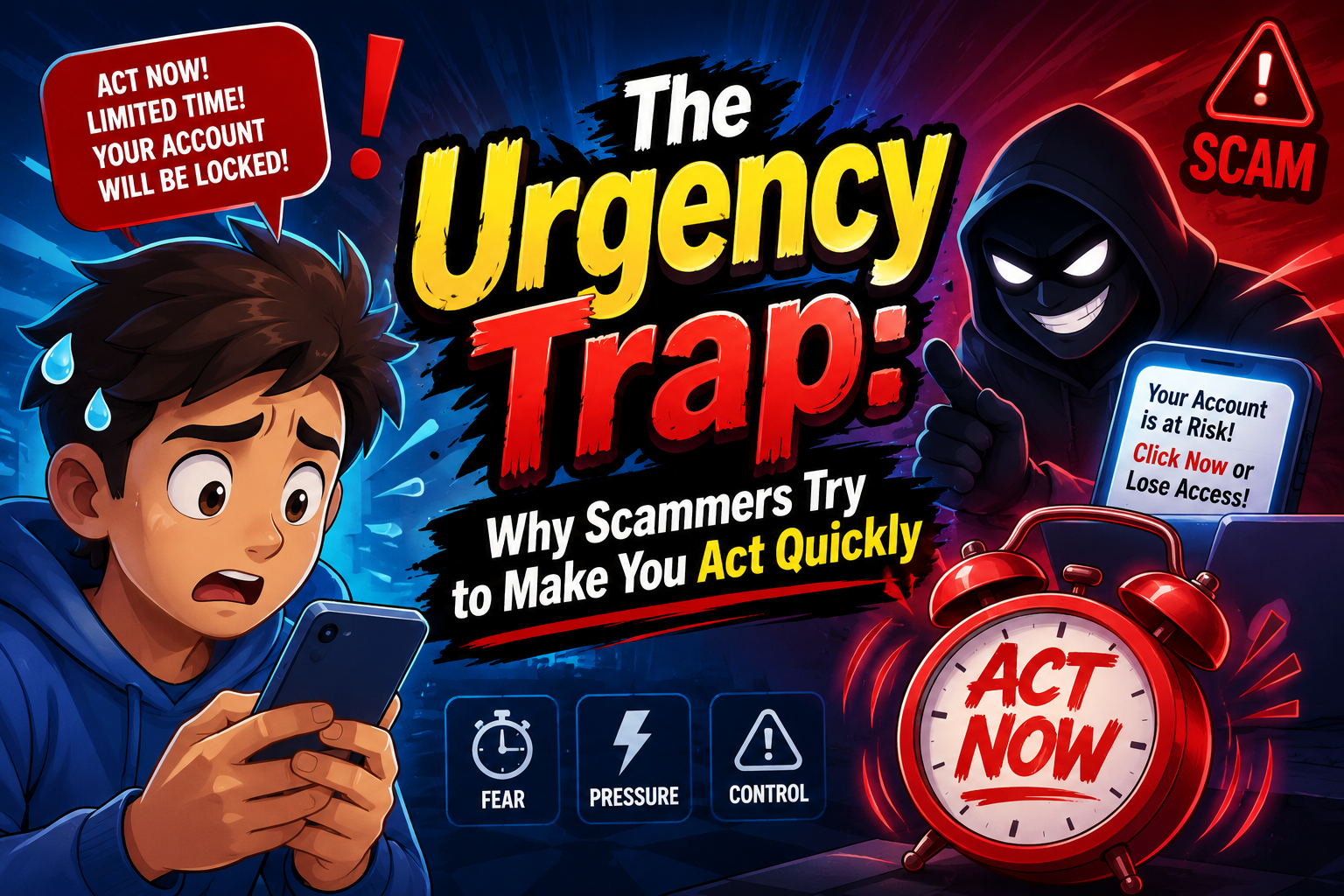
One of the most common tactics used by online scammers is creating a false sense of urgency. Whether it’s a message claiming your account will be locked, a limited-time prize, or an unexpected payment request, the goal is always the same: make you act before you have time to think. Understanding how this “urgency trap” works is one of the simplest ways to improve your online safety.
What Is the Urgency Trap?
The urgency trap is a psychological technique used by scammers to pressure people into making quick decisions. Instead of giving you time to verify information, scammers rely on panic, excitement, or fear to encourage immediate action.
When people feel rushed, they’re less likely to notice suspicious website addresses, fake email accounts, spelling mistakes, or unusual payment requests. This makes urgency one of the most effective tools in many online scams.
Fear
Messages claim your account will be suspended, your package cannot be delivered, or legal action is pending unless you respond immediately.
Excitement
Fake prize notifications or exclusive offers encourage quick action before you have time to verify their legitimacy.
Pressure
Scammers often say “Act Now,” “Only Today,” or “Your account expires in one hour” to reduce careful thinking.
Why Scammers Want You to Act Quickly
They Don’t Want You to Think
Taking even a few extra minutes often gives people enough time to recognize warning signs or contact the real organization.
They Want to Prevent Verification
If you independently visit a company’s official website or call customer support, you’ll usually discover that the urgent message isn’t genuine.
They Hope You’ll Ignore Security Warnings
Urgent situations make people more likely to dismiss browser alerts, unusual payment requests, or suspicious links.
They Count on Emotional Reactions
Fear, curiosity, and excitement can temporarily override logical thinking, making scams more successful.
Common Examples of Urgency-Based Scams
| Message Type | Typical Claim | Safer Response |
|---|---|---|
| Bank Alert | Your account will be locked today. | Visit the bank’s official website directly. |
| Delivery Notice | Your package cannot be delivered. | Check the courier’s official tracking page. |
| Prize Notification | Claim your reward before it expires. | Verify the promotion independently. |
| Technical Support | Your device is infected. | Ignore pop-ups and use trusted security software. |
| Payment Request | Pay immediately to avoid penalties. | Confirm the request with the organization. |
Common Mistakes to Avoid
- Clicking links without reading the full website address.
- Sharing passwords because a message appears urgent.
- Calling phone numbers provided in suspicious emails.
- Ignoring browser security warnings.
- Sending money before verifying the request.
- Assuming professional-looking messages are genuine.
Personal Safety Checklist
- ✔ Pause before responding to urgent requests.
- ✔ Verify organizations through official websites.
- ✔ Never share passwords by email or text message.
- ✔ Inspect website addresses carefully.
- ✔ Ignore unexpected payment demands until verified.
- ✔ Enable two-factor authentication for important accounts.
- ✔ Discuss suspicious requests with someone you trust if you’re unsure.
- ✔ Trust careful verification more than urgent deadlines.
Helpful Resource: Federal Trade Commission – How to Recognize and Avoid Phishing Scams
Frequently Asked Questions
Do legitimate companies ever send urgent messages?
Sometimes they do, but legitimate organizations also provide ways to verify the information through their official websites, customer support, or mobile apps.
Why do urgency scams work so well?
People naturally respond quickly to situations involving money, security, health, or important accounts. Scammers take advantage of these emotional reactions.
What should I do if I already clicked an urgent message?
Stop interacting with the website, avoid entering personal information, and verify the situation directly with the organization through official contact methods.
How can I avoid falling for urgency scams?
Create a personal rule: never make important online decisions while feeling rushed. Always pause, verify, and proceed only after confirming the information is genuine.
Final Thoughts
The urgency trap succeeds because it targets emotions instead of logic. Scammers know that people who feel pressured are more likely to overlook warning signs and make quick decisions. By slowing down, verifying unexpected requests, and using official communication channels, you can avoid many common online scams. Remember, genuine organizations rarely object if you take a few minutes to confirm their identity, but scammers depend on you acting immediately.