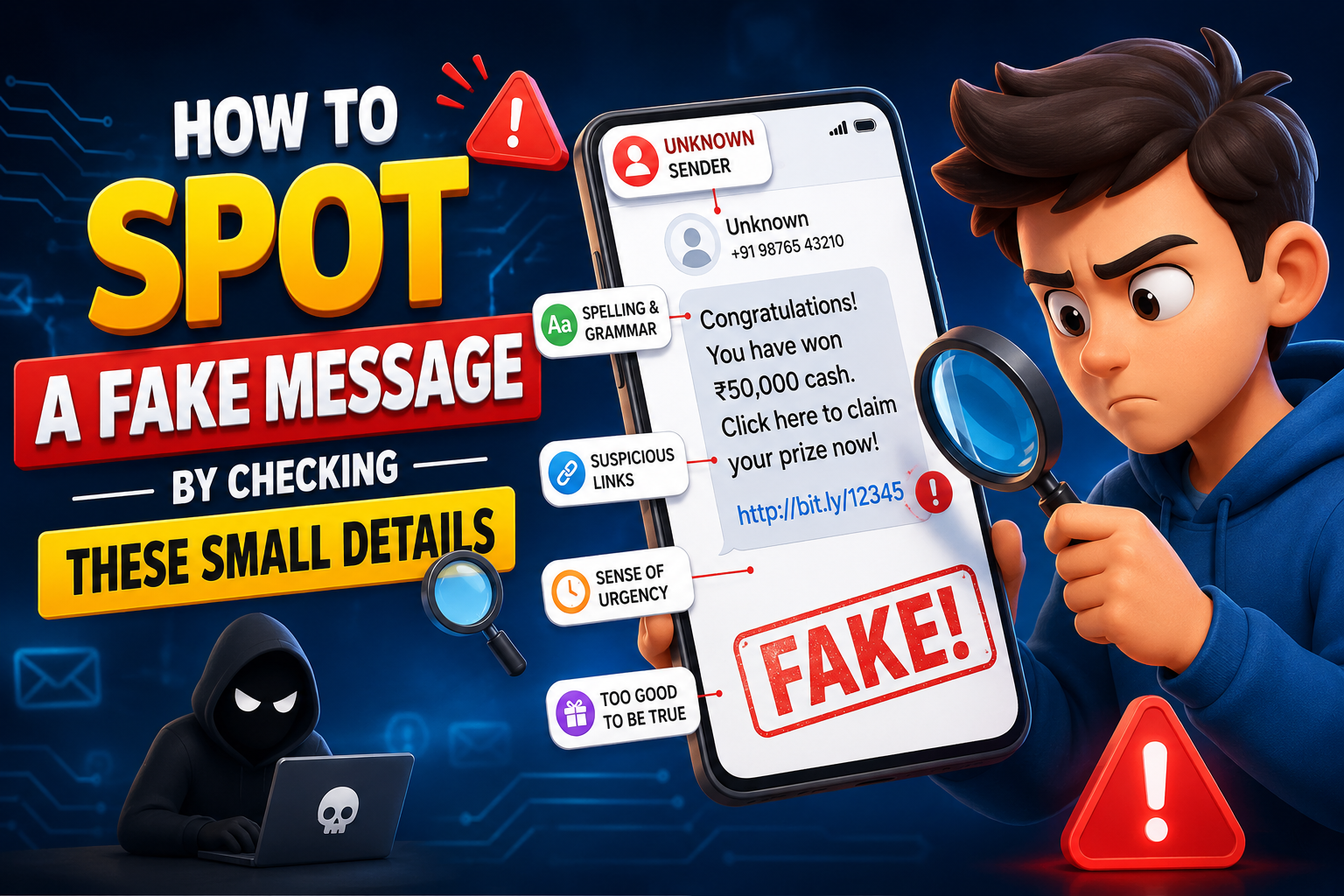
Fake messages have become increasingly convincing. They often imitate banks, delivery companies, government agencies, streaming services, or even friends and family. While some scams are easy to recognize, others rely on tiny details that many people overlook. Learning to notice these small warning signs can help you avoid phishing attacks, identity theft, and financial fraud before they happen.
The good news is that you don’t need cybersecurity expertise to spot a suspicious message. A careful review of a few simple details is often enough to reveal whether a message deserves your trust.
Pause Before You Respond
Scammers depend on quick reactions. Taking just a minute to inspect a message carefully can prevent costly mistakes.
Small Details That Reveal a Fake Message
Check the Sender’s Address
A message may display a familiar company name, but the actual email address or phone number often tells a different story. Look for unusual spellings, extra numbers, or unfamiliar domains that don’t match the official organization.
Watch for Unusual Urgency
Messages that claim your account will be locked immediately or that you must act within minutes are common scam techniques. Legitimate organizations usually provide multiple ways to verify important notifications.
Look for Grammar and Formatting Problems
Many fraudulent messages contain awkward wording, inconsistent fonts, missing logos, or poor formatting. Although some scams are professionally written, these mistakes remain common warning signs.
Inspect Every Link Carefully
Before clicking, examine where a link actually leads. Fake websites often use addresses that resemble genuine domains but include additional words, numbers, or slight spelling differences.
Question Unexpected Requests
Be cautious if a message asks for passwords, verification codes, payment information, or confidential documents. Reputable organizations rarely request sensitive information through unsolicited messages.
A Simple Verification Process
| Before You Trust the Message | Recommended Action |
|---|---|
| Unknown sender | Verify independently through official contact information. |
| Unexpected attachment | Do not open until confirmed. |
| Suspicious website link | Type the official website manually. |
| Urgent payment request | Contact the organization directly. |
| Request for passwords | Never share login credentials. |
Common Mistakes to Avoid
- Replying before verifying the sender.
- Trusting company logos without checking the email address.
- Opening attachments from unexpected messages.
- Ignoring browser security warnings.
- Sharing verification codes with anyone.
- Clicking links because the message sounds urgent.
Frequently Asked Questions
Can scammers copy official company logos?
Yes. Logos and branding are easy to copy, which is why you should verify the sender and website instead of relying on appearance alone.
Are spelling mistakes always a sign of fraud?
Not always, but poor grammar, unusual wording, and formatting problems should encourage you to investigate further before responding.
What should I do if I already clicked a suspicious link?
Close the webpage immediately, avoid entering personal information, and verify the situation using official contact methods.
Is it safe to reply asking whether the message is genuine?
No. It’s usually better to contact the organization directly using trusted phone numbers or official websites rather than responding to the suspicious message.
Final Thoughts
Most fake messages don’t rely on sophisticated technology—they rely on people overlooking small details. By checking the sender, inspecting links, questioning urgent requests, and verifying unexpected communications through official sources, you can greatly reduce your risk of becoming a victim of phishing or online fraud. Building this simple habit takes only a few extra seconds but can protect your personal information, finances, and online accounts for years to come.