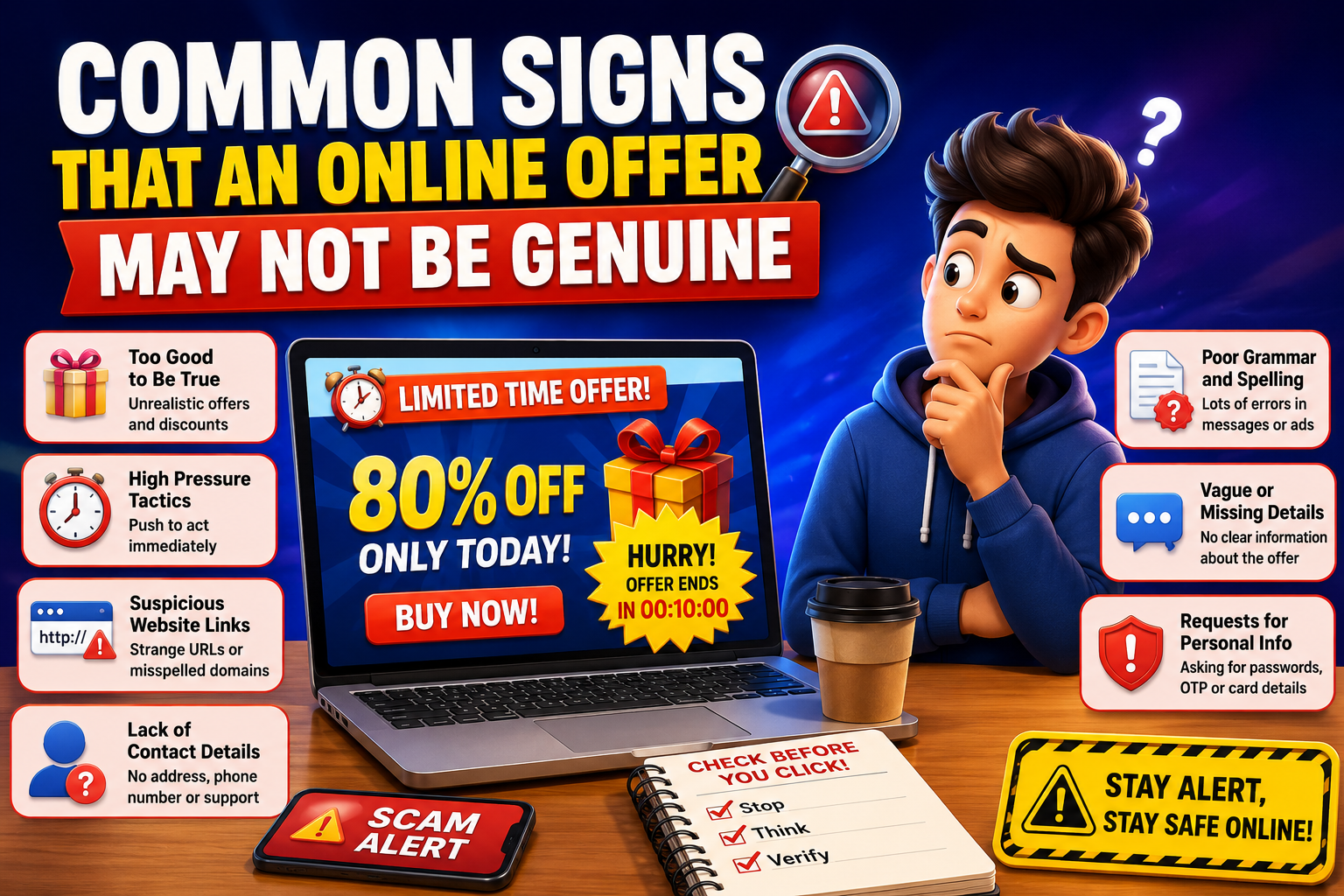
Online offers appear everywhere—from emails and social media posts to shopping websites and messaging apps. While many promotions are legitimate, others are carefully designed to trick people into sharing personal information or making unnecessary payments. Learning to recognize the warning signs of a suspicious offer can help you make safer decisions and avoid common online scams.
Fortunately, fake offers often share similar patterns. By paying attention to a few important details, you can identify many deceptive promotions before they become a problem.
Golden Rule
If an online offer creates excitement or urgency before giving you enough information to verify it, slow down and investigate before taking action.
Common Signs That an Online Offer May Not Be Genuine
The Offer Sounds Too Good to Be True
Massive discounts, guaranteed prizes, or expensive products offered for unrealistically low prices should always be approached with caution. Genuine businesses rarely make promises that seem impossible to believe.
You’re Being Pressured to Act Immediately
Scammers frequently claim an offer expires within minutes or that only a few items remain. Their goal is to prevent you from verifying the information before making a decision.
The Website Looks Unprofessional
Poor grammar, broken images, missing contact information, and inconsistent branding can indicate that a website was created quickly to support a fraudulent promotion.
Unusual Payment Methods Are Requested
Be cautious if you’re asked to pay using gift cards, cryptocurrency, wire transfers, or other methods that provide little consumer protection.
Personal Information Is Requested Too Early
Legitimate promotions generally don’t require passwords, verification codes, or sensitive financial information simply to claim a basic offer.
Simple Verification Steps
| Before Accepting an Offer | Safer Action |
|---|---|
| Verify the company | Visit its official website directly. |
| Read customer reviews | Use independent review sources. |
| Inspect the website address | Look for the correct domain name. |
| Review payment options | Choose secure payment methods. |
| Check contact information | Confirm that support details are legitimate. |
Frequently Asked Questions
Are all limited-time offers scams?
No. Many genuine businesses run temporary promotions. The important step is verifying the seller before making a purchase.
Can fake offers appear on social media?
Yes. Fraudulent advertisements and fake giveaways are common across many social media platforms.
Should I trust professional-looking websites?
Not automatically. Modern scam websites can look convincing, so always verify the domain name and company information independently.
What’s the safest response to a suspicious offer?
Pause, research the company, and avoid providing payment or personal information until you’ve confirmed the offer is genuine.
Helpful Tip
Instead of clicking promotional links in emails or messages, search for the company’s official website yourself. If the offer is genuine, you should usually be able to find it there.
Common Mistakes to Avoid
- Believing unrealistic discounts without verification.
- Ignoring suspicious website addresses.
- Sharing payment details too quickly.
- Trusting offers because friends shared them.
- Rushing because of countdown timers.
- Skipping reviews before purchasing.
Quick Safety Checklist
- ✔ Verify the seller.
- ✔ Check the website address.
- ✔ Compare prices with other retailers.
- ✔ Read independent reviews.
- ✔ Avoid unusual payment methods.
- ✔ Ignore unnecessary urgency.
- ✔ Protect personal information.
- ✔ Trust careful research over excitement.
Helpful Resource:
Federal Trade Commission – Consumer Advice